
“Hopefully, this time the UN will choose a woman, and ideally one from Latin America!”
Laura Chinchilla Miranda served as President of Costa Rica from 2010 to 2014, becoming the first woman to lead the government of the Central American country. Since January 2026, she has served as President of the Club de Madrid, the world’s largest forum of former democratic heads of state and government. Sven Lilienström, founder of the Faces of Democracy initiative, spoke with the 67-year-old Costa Rican politician about her agenda as president of the Club de Madrid, the next United Nations Secretary-General, and why everyone should start their day with a good cup of Costa Rican coffee!
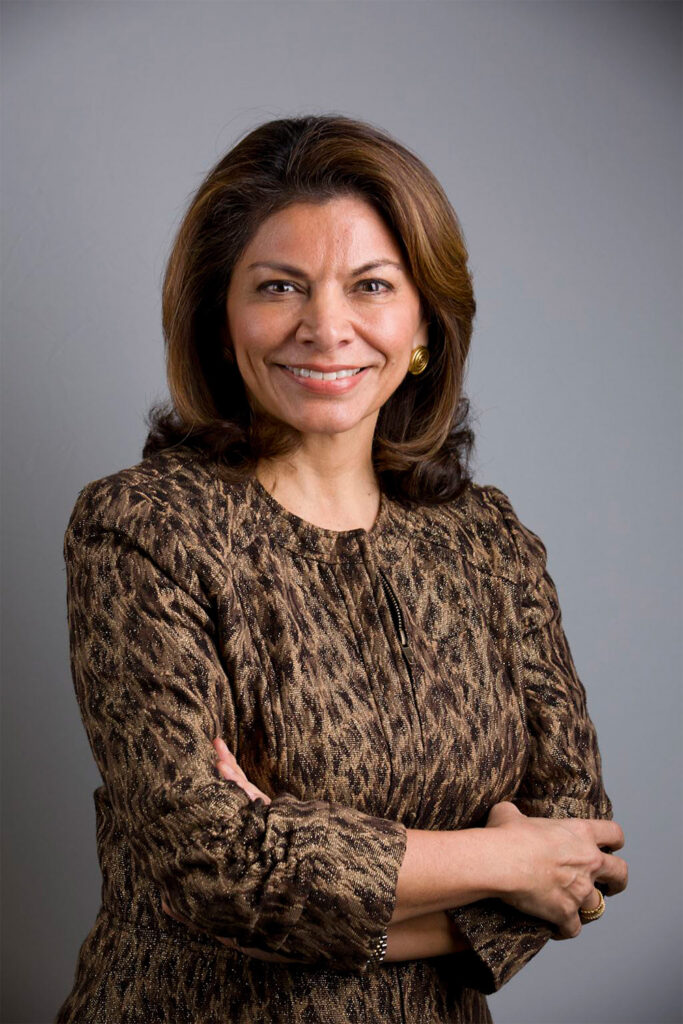
Laura Chinchilla Miranda, Former President of Costa Rica and President of the Club de Madrid | © Club de Madrid
Madam President, for the past nine years, we at Faces of Democracy have asked all of our distinguished guests the very same opening question: What do democracy and democratic values mean to you personally?
Laura Chinchilla Miranda: Democracy and the values underpinning it are indispensable for guaranteeing the protection of human dignity. While non-democratic political systems may resolve certain specific economic, social, or security issues, they can never guarantee full respect for individuals‘ civil rights – such as freedom of expression and association, equality before the law, and respect for minorities. It is true that contemporary democracies have their flaws and limitations; however, unlike autocracies, they are capable of improvement and correction through the full exercise of the popular will, expressed via the right to elect one’s leaders.
Democracy is the ideal system for creating the conditions of peace, political stability, and prosperity that people deserve!
As a citizen of Latin America’s oldest uninterrupted democracy – Costa Rica, I can attest that democracy is also the ideal system for creating the conditions of peace, political stability, and prosperity that people deserve.
In early April 2026, the Economist Intelligence Unit (EIU) published its latest Democracy Index. The index points to a stabilization in global democratic scores after eight consecutive years of decline. How do you assess these findings?
Laura Chinchilla Miranda: The stabilization of global democratic scores is encouraging, but it would be premature to interpret it as “the end of global democratic recession” worldwide. The factors that contributed to democratic erosion over the past decade remain firmly in place: political polarization, declining trust in institutions, disinformation, growing inequality, and the rise of populist and authoritarian movements. This is especially true for regions like Latin America.
What we may be witnessing is a pause in the deterioration rather than a reversal of the trend.
What we may be witnessing is a pause in the deterioration rather than a reversal of the trend. The real test will be whether democracies can regain citizens’ confidence by delivering effective governance, protecting fundamental freedoms, and adapting institutions to the challenges of a rapidly changing world.
One particularly encouraging finding of the 2026 report is the continued rise in political participation, especially among younger generations!
One particularly encouraging finding of the 2026 report is the continued rise in political participation, especially among younger generations. This suggests that while confidence in institutions may have weakened, commitment to shaping public affairs has not. The challenge now is to channel this renewed civic engagement into stronger democratic institutions, more responsive governance, and lasting democratic renewal.
According to the latest Democracy Index, the most striking negative case is the United States. Are you concerned about democracy in the United States, or do you trust in the resilience of American institutions?
Laura Chinchilla Miranda: Both. I am concerned because the United States is experiencing many of the pressures affecting democracies worldwide: polarization, institutional distrust, disinformation, and challenges to established democratic norms. More specifically, concerns have been raised about the independence of the judiciary, increasing tensions between political leaders and the free press, and attempts to politically influence or reshape key aspects of the electoral system. Given the country’s global influence, these trends have implications far beyond its borders.
The question is not whether the American institutions can withstand pressure indefinitely, but whether political leaders and citizens remain committed to protecting and strengthening them.
At the same time, I continue to have confidence in the resilience of American democracy. That confidence is nurtured not only by the strength of its constitutional framework, federal structure, independent institutions, vibrant civil society, and long democratic tradition, but also by my own experience as Head of the Organization of American States Electoral Observation Mission during the 2016 U.S. presidential election. That assignment gave me the exceptional opportunity to observe firsthand the functioning of American democracy across different states and institutions. The question is not whether these institutions can withstand pressure indefinitely, but whether political leaders and citizens remain committed to protecting and strengthening them. The health of any democracy ultimately depends not only on its formal institutions, but also on the willingness of society to defend democratic norms and the rule of law.
On January 1, 2027, the next Secretary-General of the United Nations will take office – an enormous challenge against the backdrop of a rapidly changing world order. Does the UN need to redefine its role in the world? If so, what could that new role look like?
Laura Chinchilla Miranda: The UN does not need to abandon its founding mission, but it does need to adapt its role to twenty-first century realities. The organization remains indispensable as the only universal forum capable of convening states around shared challenges.
The UN does not need to abandon its founding mission, but it does need to adapt its role to twenty-first century realities.
However, it must become more effective in addressing issues that transcend borders, including climate change, technological governance, pandemics, migration, and threats to peace and security. A main challenge is to focus on strengthening the UN’s capacity to deliver global public goods, fostering cooperation among increasingly fragmented powers, and advancing reforms that make multilateral institutions more representative, credible, and responsive.
The selection of a new Secretary-General presents a unique opportunity for renewal. Hopefully, this time the UN will choose a woman, and ideally one from Latin America!
The selection of a new Secretary-General presents a unique opportunity for renewal. Hopefully, this time the UN will choose a woman, and ideally one from Latin America. Equally important is the fact that the current process has allowed the international community to hear candidates’ ideas and priorities more openly than in the past. This creates an opportunity for a broader discussion about the future of the organization – one in which not only member states, but also international organizations, academia, and civil society can contribute their voices. At a moment of profound global transformation, the UN should embrace this spirit of openness and engagement as part of its own renewal.
Costa Rica is widely regarded – not least because of your leadership as President from 2010 to 2014 – as one of the most stable democracies in Central America. How do you look back today on your political legacy in your home country?
Laura Chinchilla Miranda: I prefer to leave judgments about legacy to historians and citizens. What I can say is that throughout my public life I sought to strengthen the institutions that have long been the foundation of Costa Rica’s success: democracy, the rule of law, social investment, environmental stewardship, and openness to the world. I am particularly proud of having governed during a period of global uncertainty while preserving democratic stability, advancing infrastructure and social policies, and reinforcing Costa Rica’s international standing. Today, more than any individual accomplishment, I hope my contribution is associated with the conviction that progress is only sustainable when it is built on strong institutions, dialogue, and respect for democratic values.
I chose to defend one of our nation’s most cherished values: being an unarmed democracy. We turned to international law and brought the case before the International Court of Justice.
One episode that reflects these convictions occurred when the Nicaraguan dictatorship illegally occupied a portion of Costa Rican territory during my presidency. Some voices urged me to respond by strengthening military capabilities or even reconsidering Costa Rica’s historic decision to abolish its army. Instead, I chose to defend one of our nation’s most cherished values: being an unarmed democracy. We turned to international law and brought the case before the International Court of Justice. The rulings were favorable to Costa Rica and strengthened our legal authority and border management arrangements along the frontier with Nicaragua. More than a diplomatic victory, it was a reaffirmation of our belief that even in moments of tension and provocation, the rule of law is a more powerful and enduring instrument than force.
Today, more than any individual accomplishment, I hope my contribution is associated with the conviction that progress is only sustainable when it is built on strong institutions, dialogue, respect for democratic values, and unwavering confidence in the power of law over coercion.
You have served as President of the Club de Madrid since the beginning of this year. What exactly does the Club de Madrid do, and which issues have you placed at the top of your agenda for your three-year term?
Laura Chinchilla Miranda: Founded in 2001, Club de Madrid is celebrating its 25th anniversary as the world’s largest forum of democratic former Presidents and Prime Ministers, who share a common commitment to democracy, human rights, and inclusive sustainable development. Drawing on their unique leadership experience, our members work to strengthen democratic governance, support peaceful conflict resolution, promote multilateral cooperation, and help address some of the most pressing global challenges of our time. I have been a member since 2015, and this year a had the honor to be elected as President of the organization.
In an increasingly fragmented world, we need new approaches to protect and finance global public goods such as climate stability, health, peace and security, and digital governance.
During my three-year term, I have placed two priorities at the center of our work. The first is democracy: understanding the causes of democratic backsliding and advancing practical solutions to strengthen institutions, civic participation, and democratic leadership. The second is the future of multilateral cooperation. In an increasingly fragmented world, we need new approaches to protect and finance global public goods such as climate stability, health, peace and security, and digital governance. This is why our 2026 Policy Dialogue is focused on “Governing and Delivering Global Public Goods in a Fragmented World,” including innovative ideas such as Global Public Investment, which seeks to make international cooperation more effective, inclusive, and fit for the realities of the twenty-first century.
Madam President, our seventh and final question is always a personal one: Even ChatGPT refused to tell us anything about your private life. But we’ll give it a try anyway: What do you enjoy doing outside of politics?
Laura Chinchilla Miranda: I must confess that ChatGPT is not entirely wrong – I have always preferred to keep my private life somewhat separate from my public one. But since you asked, one of my greatest pleasures is reading. I particularly enjoy historical novels, magazines, and newspapers. In fact, I am still a subscriber to printed newspapers!
There is something special about starting the day with a good cup of Costa Rican coffee – the best in the world, in my admittedly biased opinion.
There is something special about starting the day with a good cup of Costa Rican coffee – the best in the world, in my admittedly biased opinion – and a paper newspaper by my side. In a world that moves increasingly fast, I find that ritual both relaxing and grounding.
Beyond that, what I value most is time spent with family and friends. I especially enjoy inviting them to my home, sharing a meal, and engaging in the kind of long conversations that often wander from current events to personal stories, memories, and laughter. My home is a particularly meaningful place for me because it was built together with my husband, my life partner and greatest companion, who passed away a few years ago. Every gathering there carries memories of a life we built together and of the values we shared.
Private life reminds you that, at the end of the day, our happiness is built around human relationships, cherished memories, and the people we love!
Public life teaches you the importance of institutions and leadership, but private life reminds you that, at the end of the day, our happiness is built around human relationships, cherished memories, and the people we love. Those moments of connection continue to be among the most important sources of joy and gratitude in my life.